Poems of Bibhas Roy Chowdhury
Bengali poem in English rendering
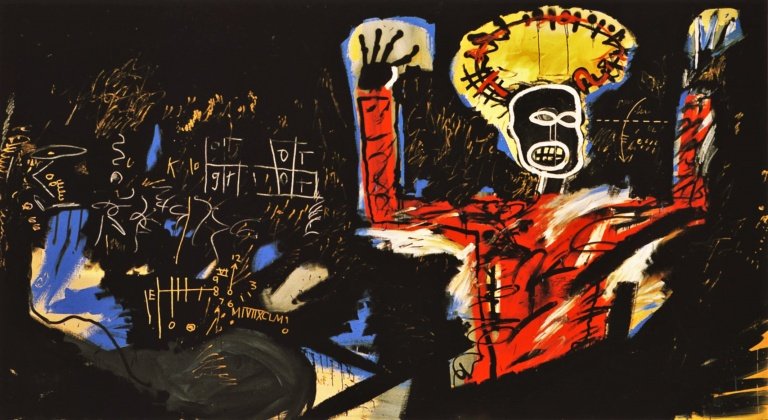
Poverty and Power by Jean-Michel Basquiat
Why on Earth Do You Call Them Migrants?
By
Bibhas Roy Chowdhury
Rabindranath writes, “They Work”,
By this he means to say
The kings and the great kings die,
But the labors never die.
In India today Rabindranath is
A useless name,
As the ministers think
They are themselves poets.
In India today the labors are,
In fact, cheap slaves
Who have no country of their own.
In search of the babus
The labors travel
All around India.
The book called The Constitution
Reads—in India there are
Neither babus nor servants,
But Indians.
Democracy is now
The pet pigeon of the babu families.
(The babus change, but the house
Full with pigeons
Remains the very same)
Democracy is now
The shameless hunger
In the servants’ houses.
(And in this case,
Neither the servants
Nor the hunger changes at all)
They, to whom my words hurt,
Can curse me as much as they can
But, in return, they must answer this—
In search of the babus,
Can the labors travel
All around this country or not?
I suppose they can.
If so, why on earth does the country
Call them migrants
During their helpless homecoming?
Let Indian babus answer this.
Let Indian media answer this.
Tell me, how come the labors
Are migrants who yearn
To return home
With their woman and children,
With loads in their heads,
After getting kicked off
by the owners,
Being hungry and mutilated?
Look, each comment has its
Own counter-comment.
Whenever you say migratory labors,
I’ll say you back
The migratory President,
Or the migratory Prime Minister,
Or rather the goddamn
Migratory ministers, the bad eggs.
There’s a limit to humiliation, O India!
A day will come when
They won’t work anymore
In cities or in ports
Despite being hailed
By thousands of Rabindranath
In their poems,
And then The Constitution itself
Will run to them,
Bow down to their feet
And say with folded hands—
“Save me! I am yours…
I’m only for you!”
Translated by Bankim Let from the Bengali poem,’Keno Bolchho Ora Pariyayi?’